
We also deserve to live on our own land, in our own homes. We need secure land rights. The ownership of the 7-perch land plots that have already been allocated must be legally guaranteed. As women’s organizations, we will continue to work together until these rights are realized.”
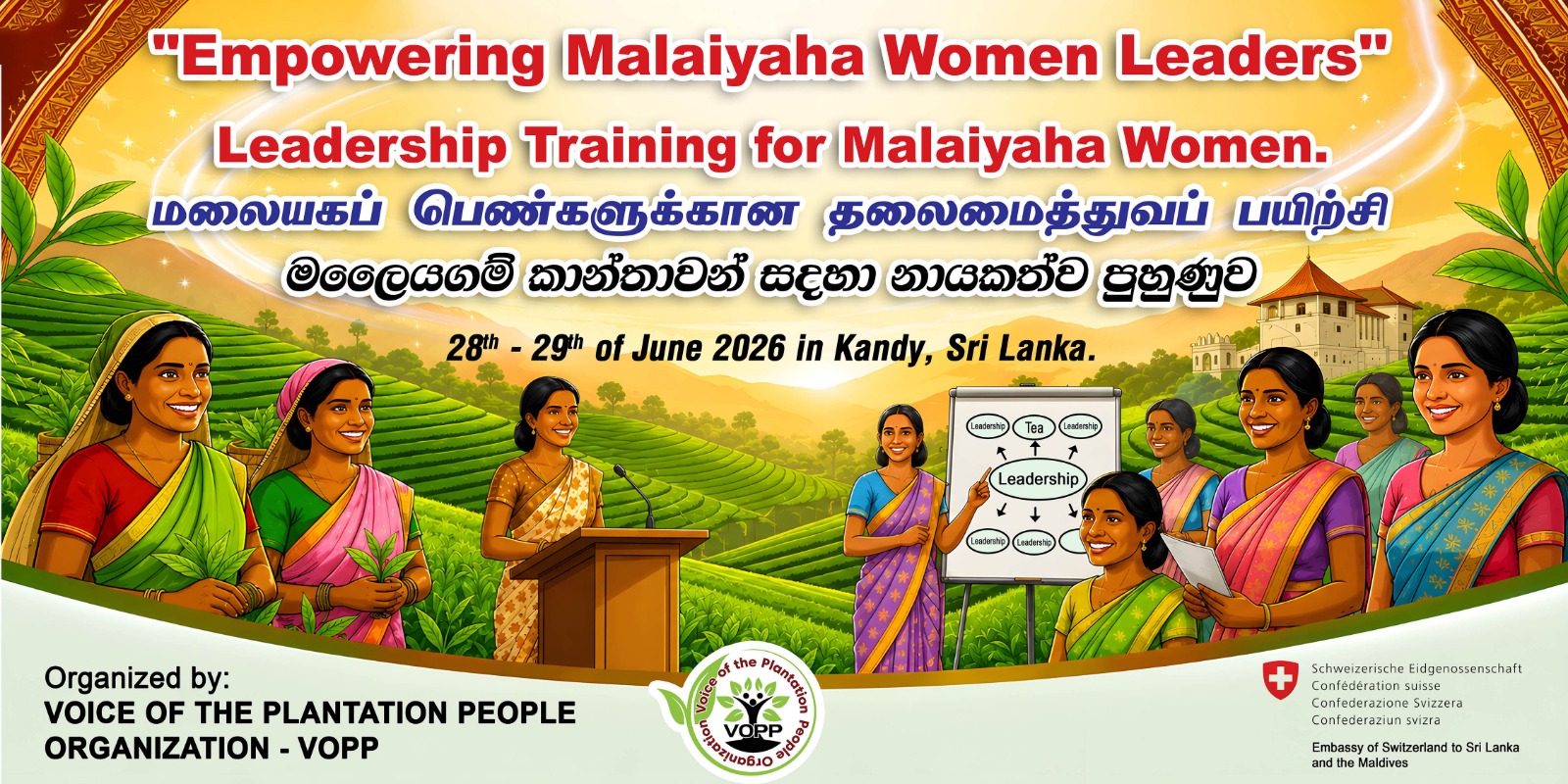
This powerful pledge was made by Malaiyaha women leaders who participated in a two-day Leadership Training Programme organized by Voice of the Plantation People (VOPP) with the support of the Embassy of Switzerland in Sri Lanka.
The programme, held in Kandy, brought together 29 women leaders representing the District Malaiyaha Women’s Federations from Matara, Galle, and Kalutara. It served as a platform to strengthen women’s leadership while fostering collective action to address the challenges faced by the Malaiyaha community.
Throughout the training, participants identified and discussed critical issues affecting Malaiyaha women and their communities, including land insecurity, social and economic inequalities, and limited participation in decision-making processes. The sessions also explored practical strategies for addressing these challenges through community organizing, women’s leadership, collective action, and rights-based advocacy.
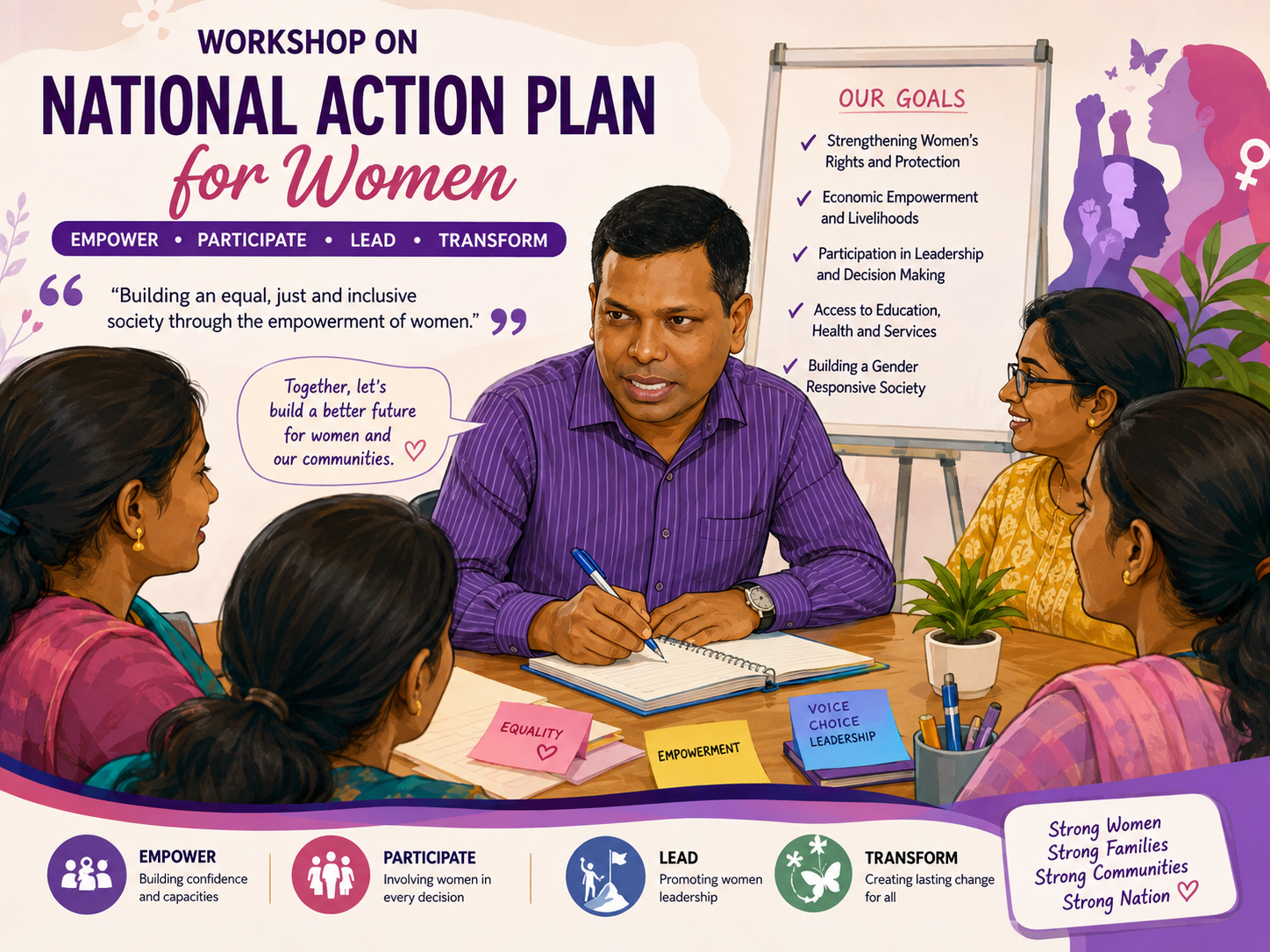
The training was facilitated by Mr. Lalith Abeysinghe, National Training Consultant, who conducted interactive sessions on leadership, effective communication, team building, personal development, and community mobilization. The programme encouraged participants to develop practical leadership skills while strengthening their confidence to engage with their communities and advocate for social justice.
The event was attended by Mr. Anthony Jesudasan, Executive Director of Voice of the Plantation People (VOPP), Ms. Lavina Hasanthi, Project Lead, Mr. Endan Vanaththaiya, Field Manager, Ms. K. Harshani, Galle District Coordinator, and Ms. K. Yogasuji, Kalutara District Coordinator.
By the end of the two-day programme, participants demonstrated renewed confidence, stronger leadership capacities, and a deeper commitment to advancing the rights of Malaiyaha women. The training inspired them to move beyond identifying challenges and to work collectively as community leaders, advocating for land rights, gender equality, and inclusive development.
As the programme concluded, participants reaffirmed their commitment to continuing their collective struggle for secure land rights, dignified housing, and equal opportunities for the Malaiyaha community. Their pledge reflected not only a shared vision for justice but also a growing movement of empowered women determined to lead positive change within their communities.